SILK-BioCraft
2025
Member: 1
Design category: product design / speculative design
Role: -
Achievements: JIDF Finalist
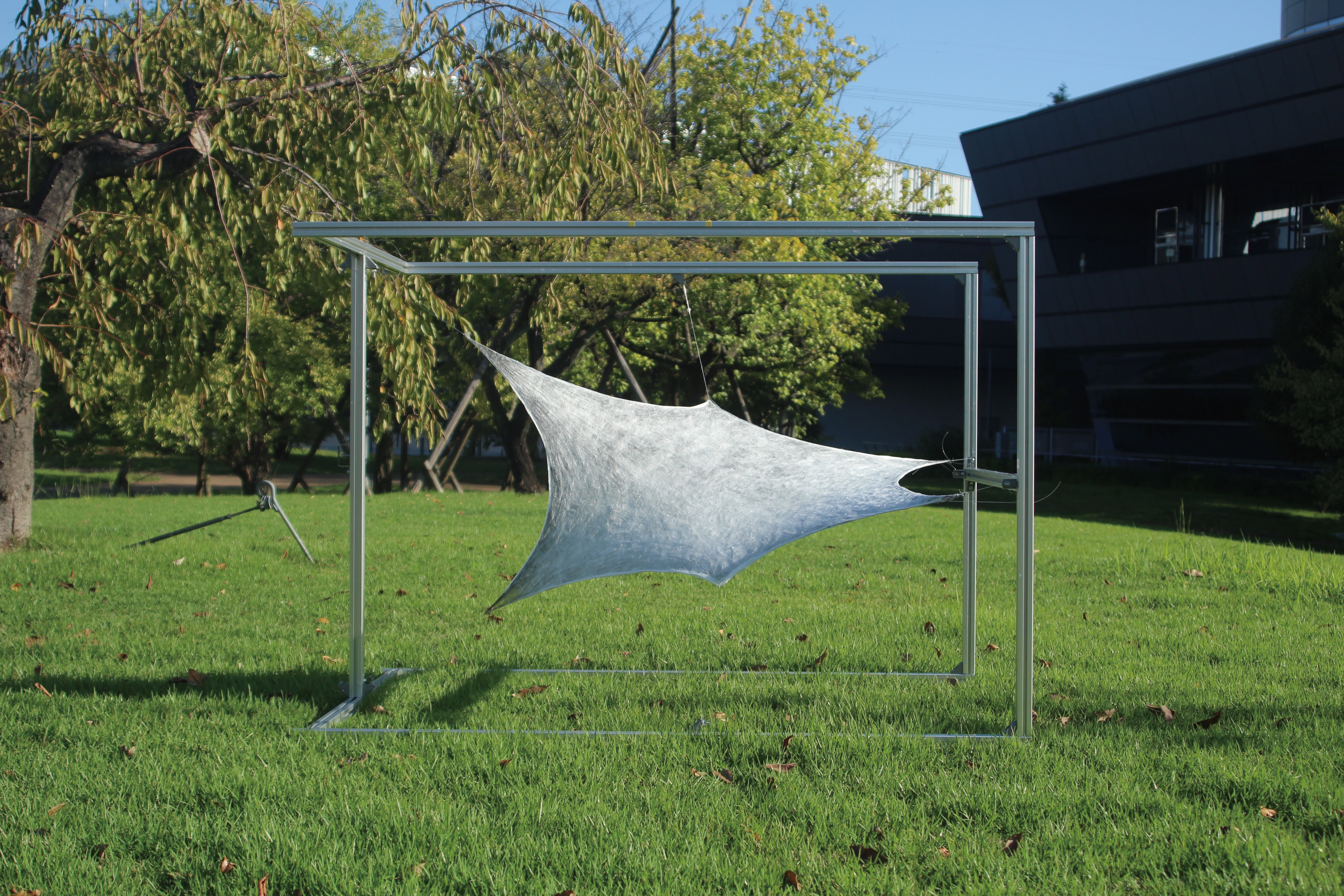
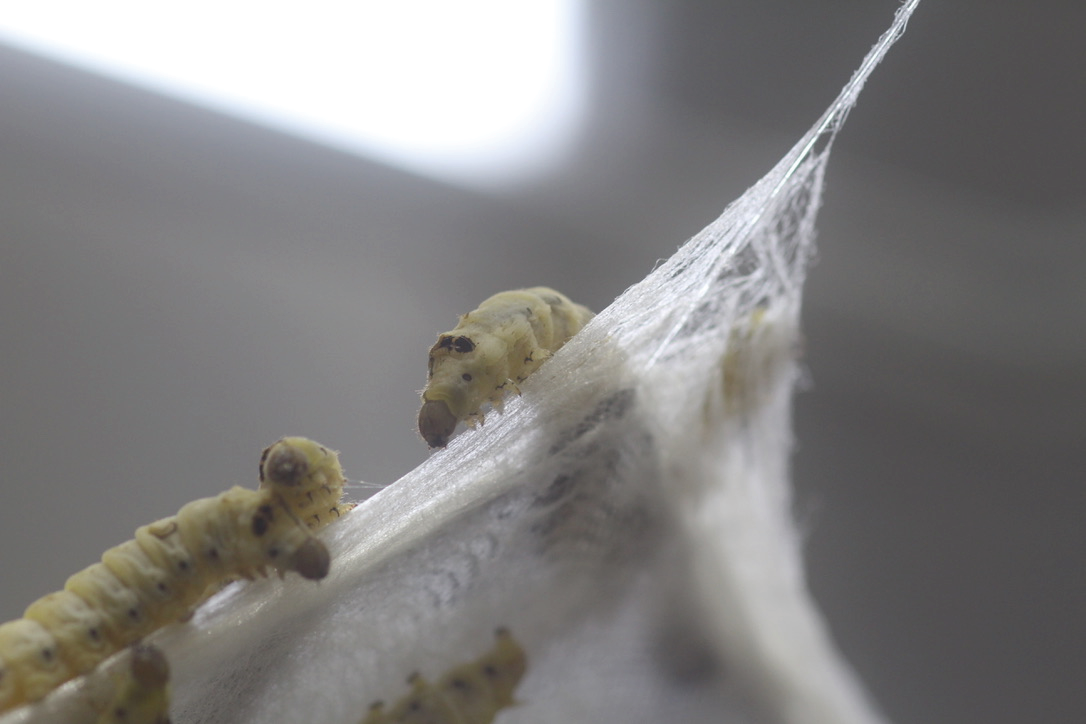
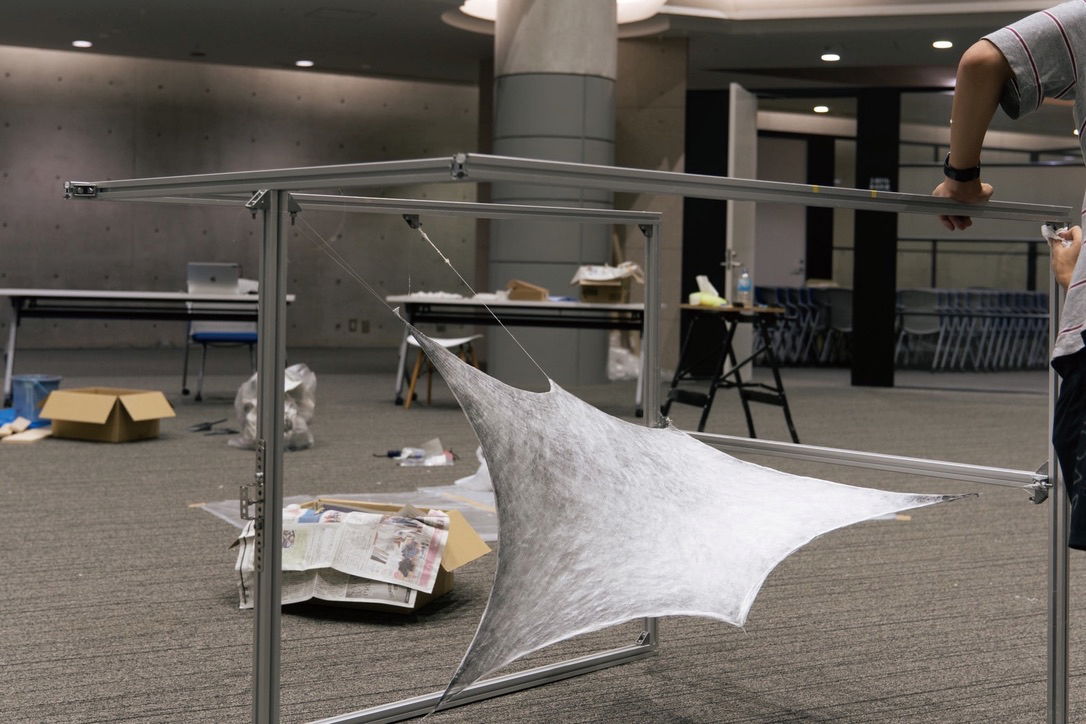
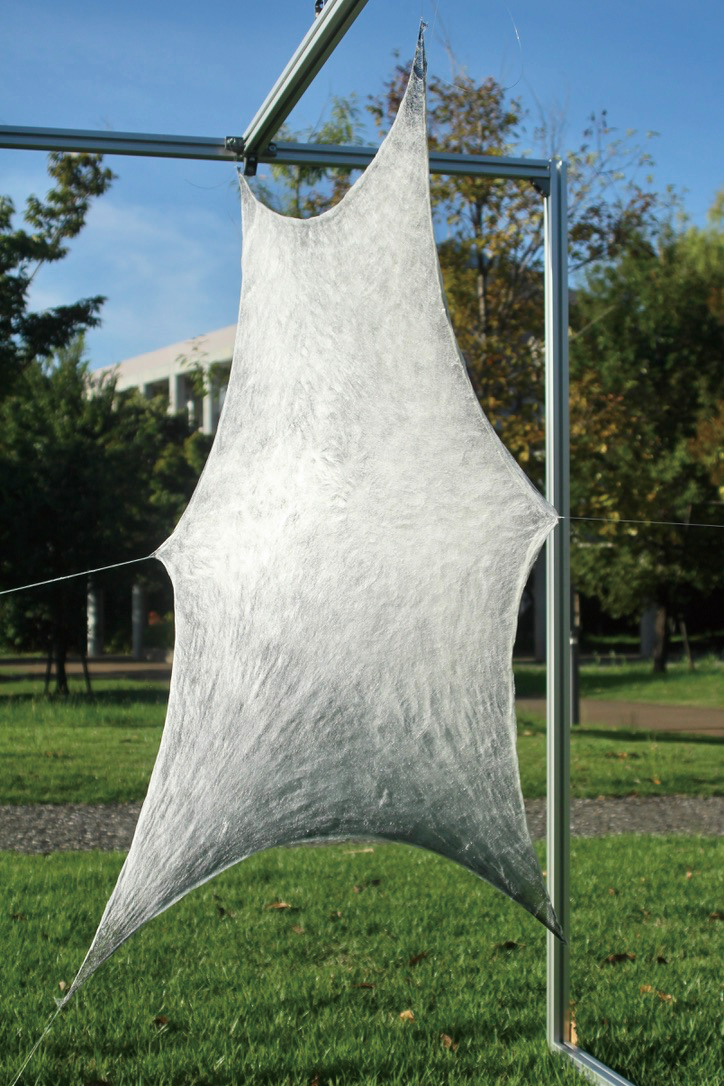
SILK-BioCraftは、蚕の持つ習性の一つである平面吐糸に着目、特殊な装置を用い平面吐糸を誘引することで、蚕と人の共創によって作品を作り上げることを可能とした手法と新たな工藝のあり方の提案です。
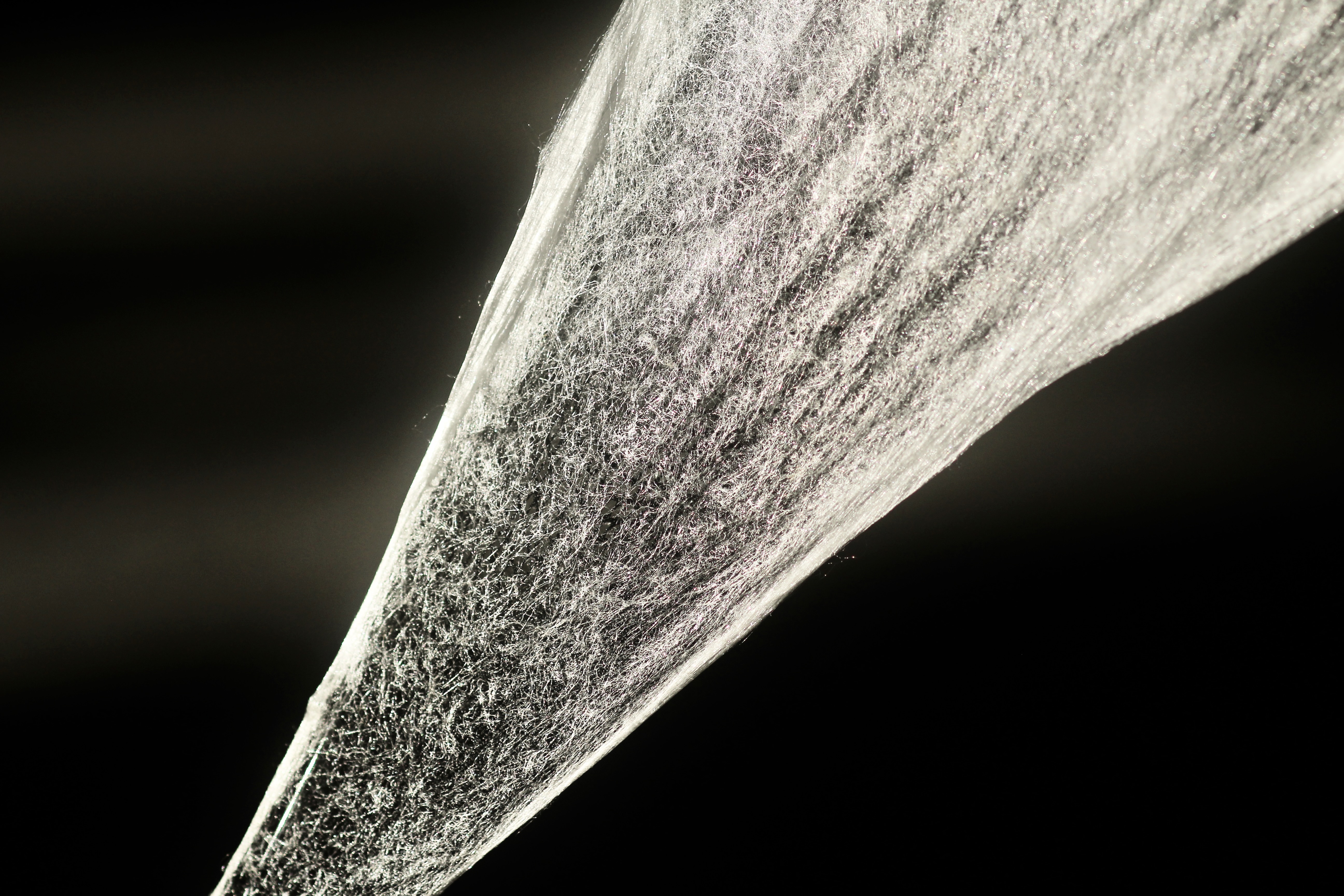
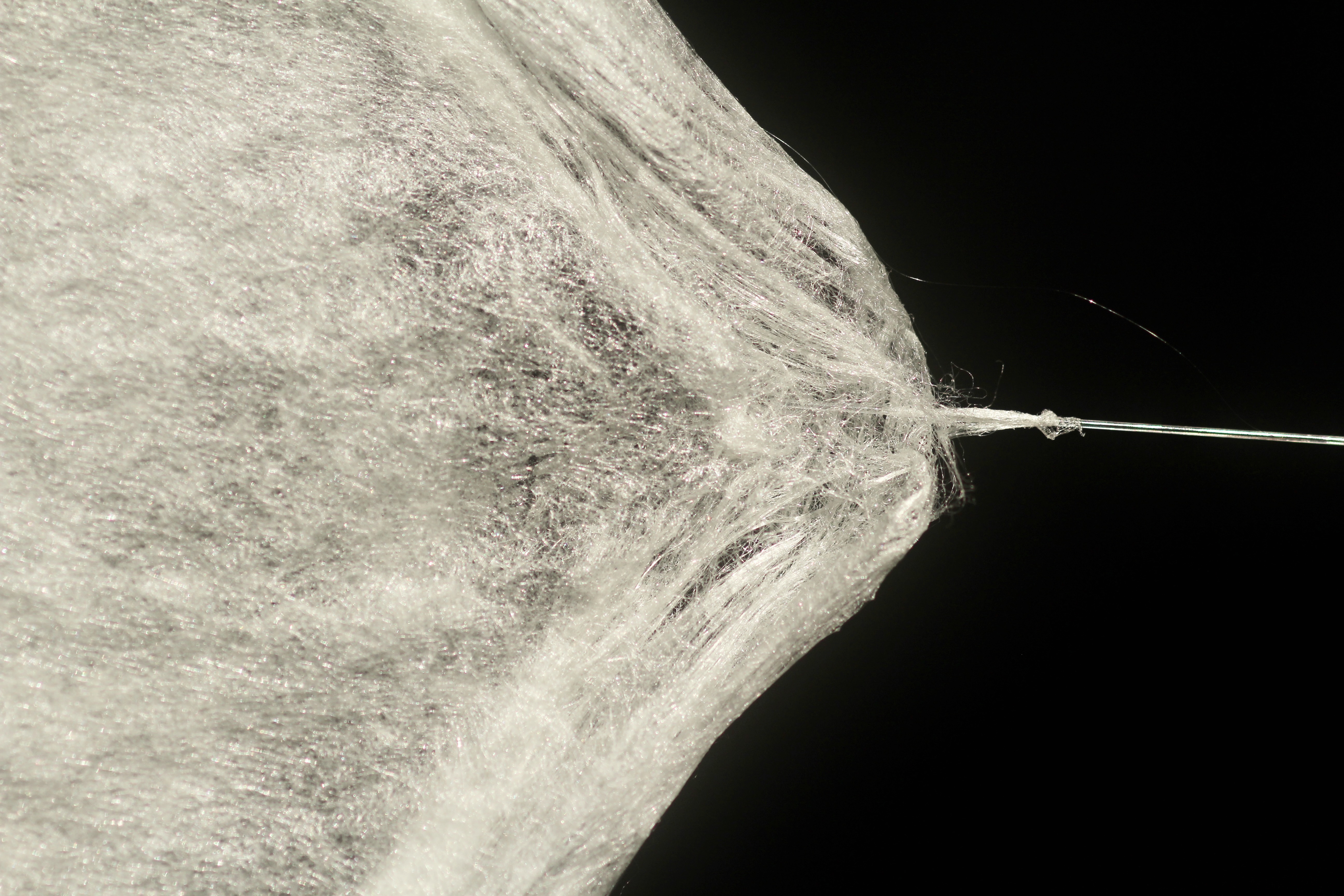
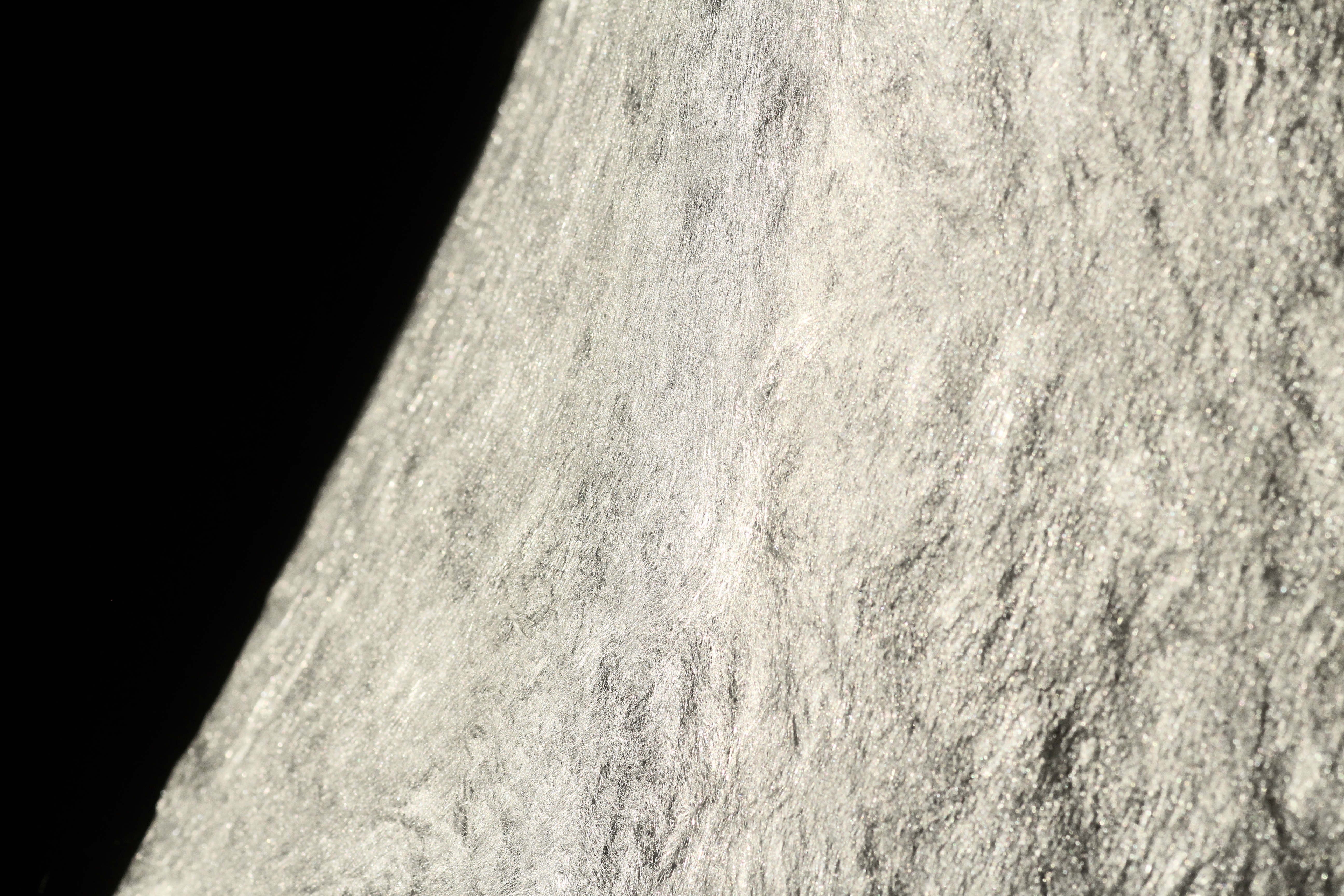
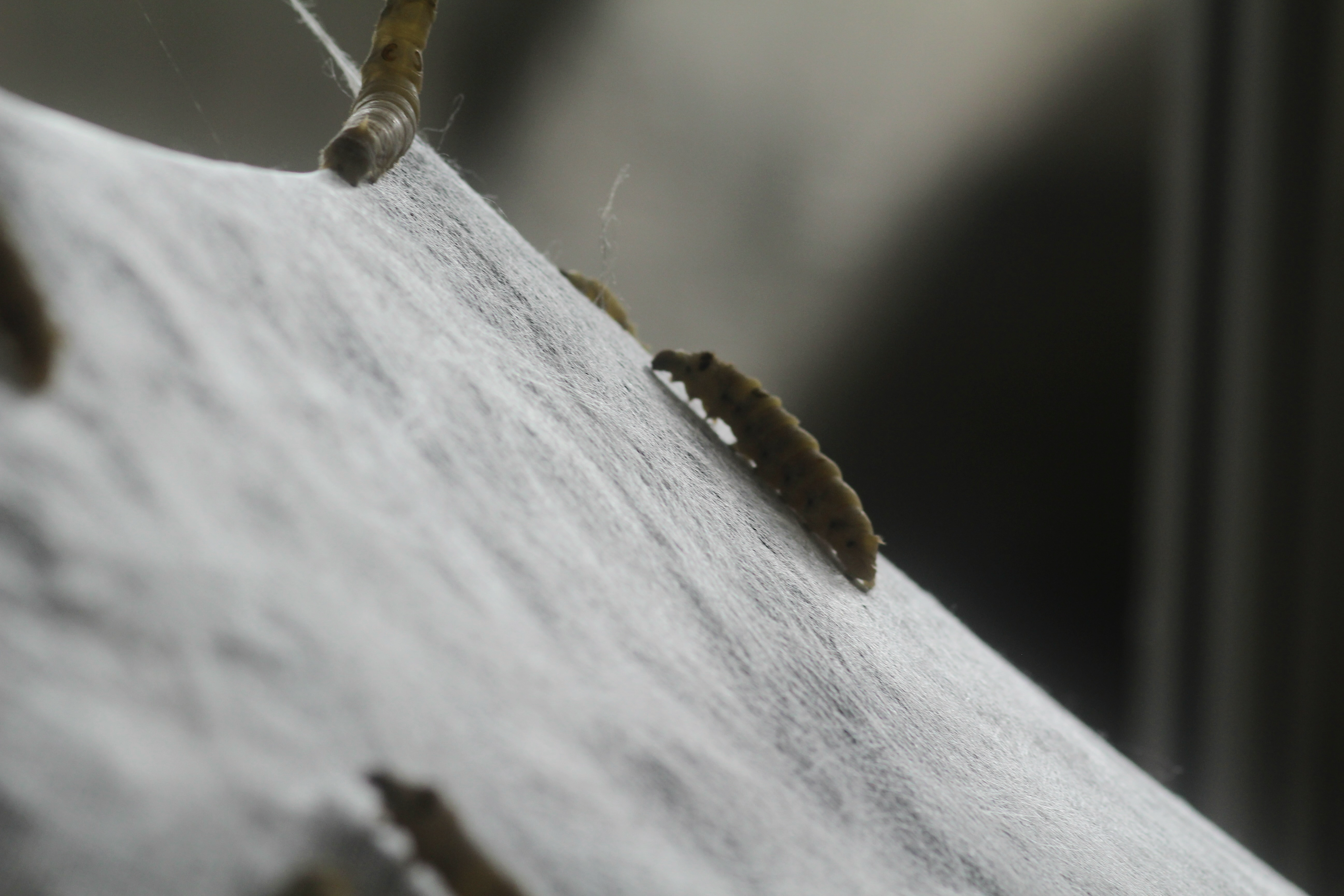
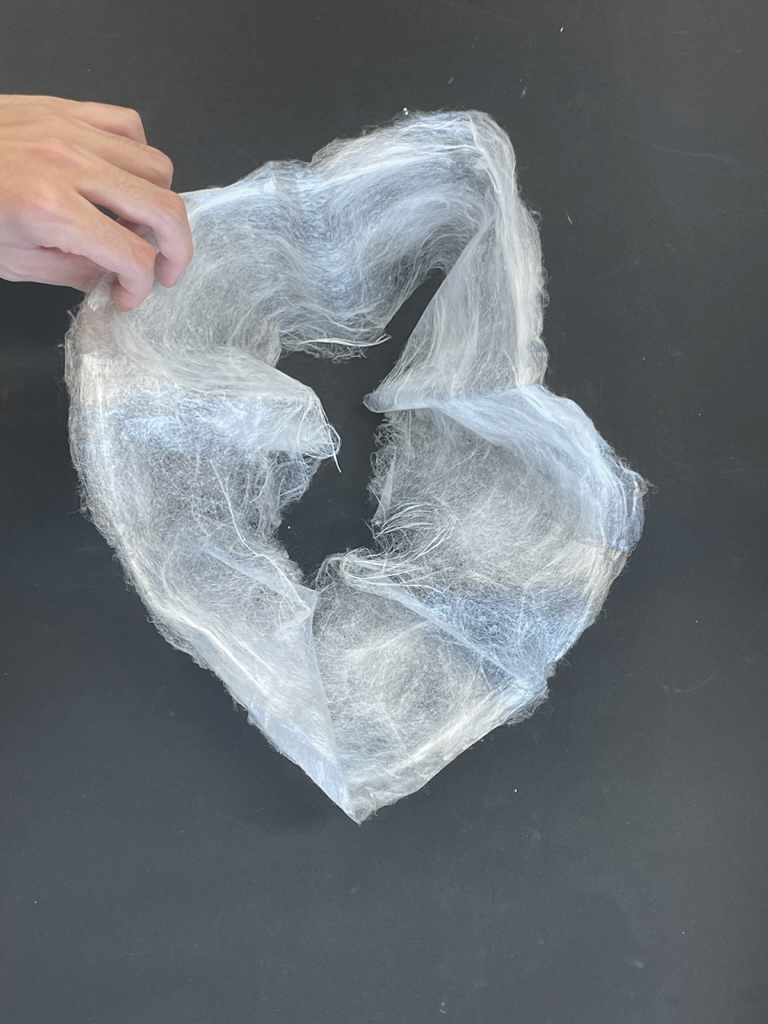
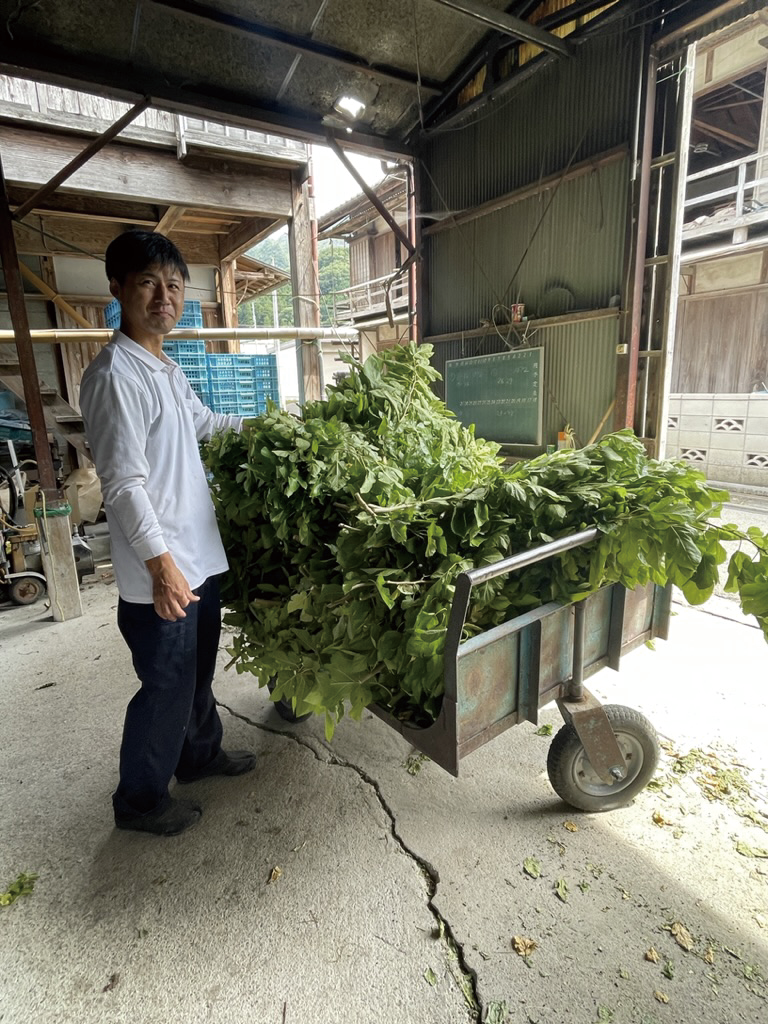
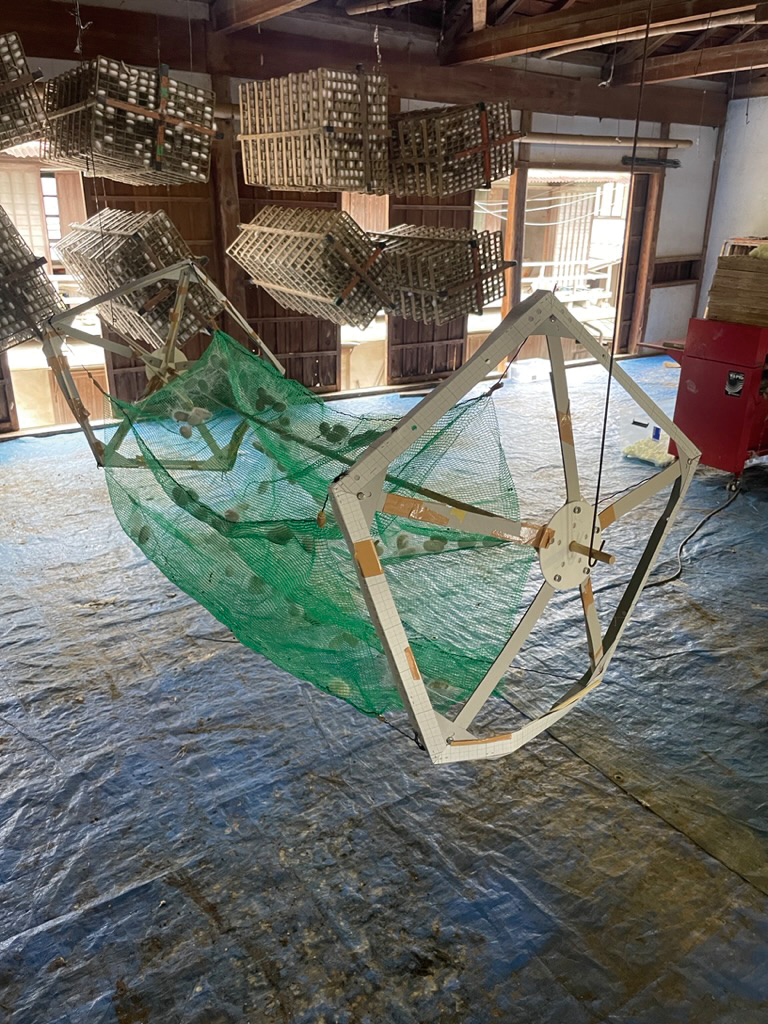
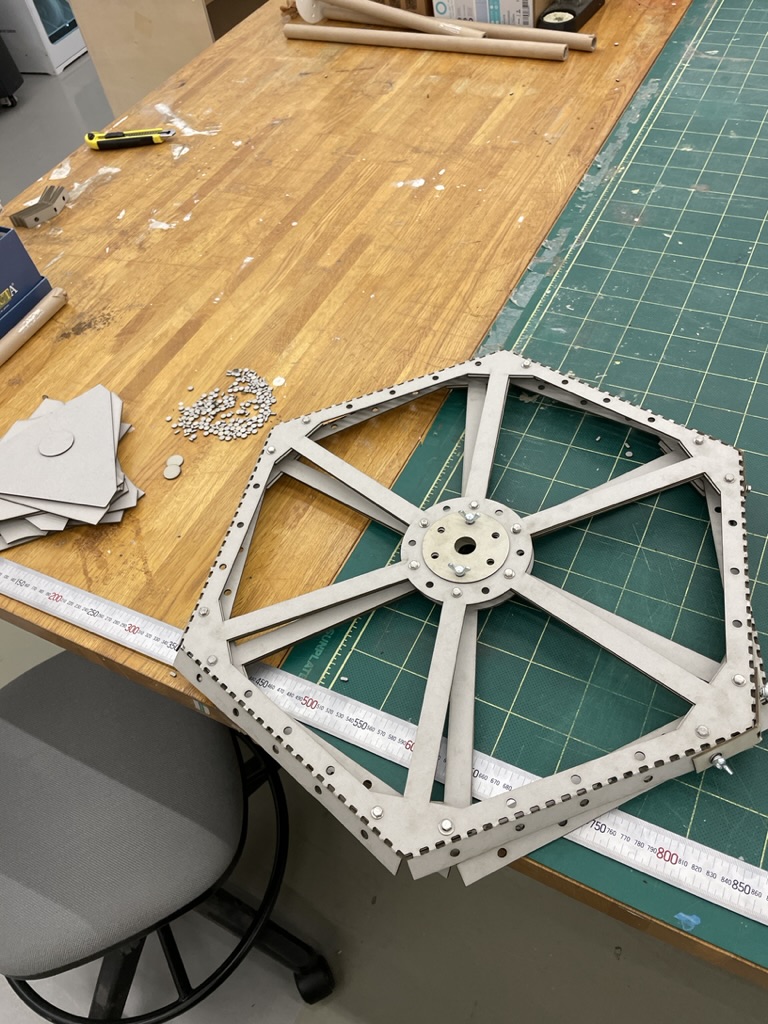
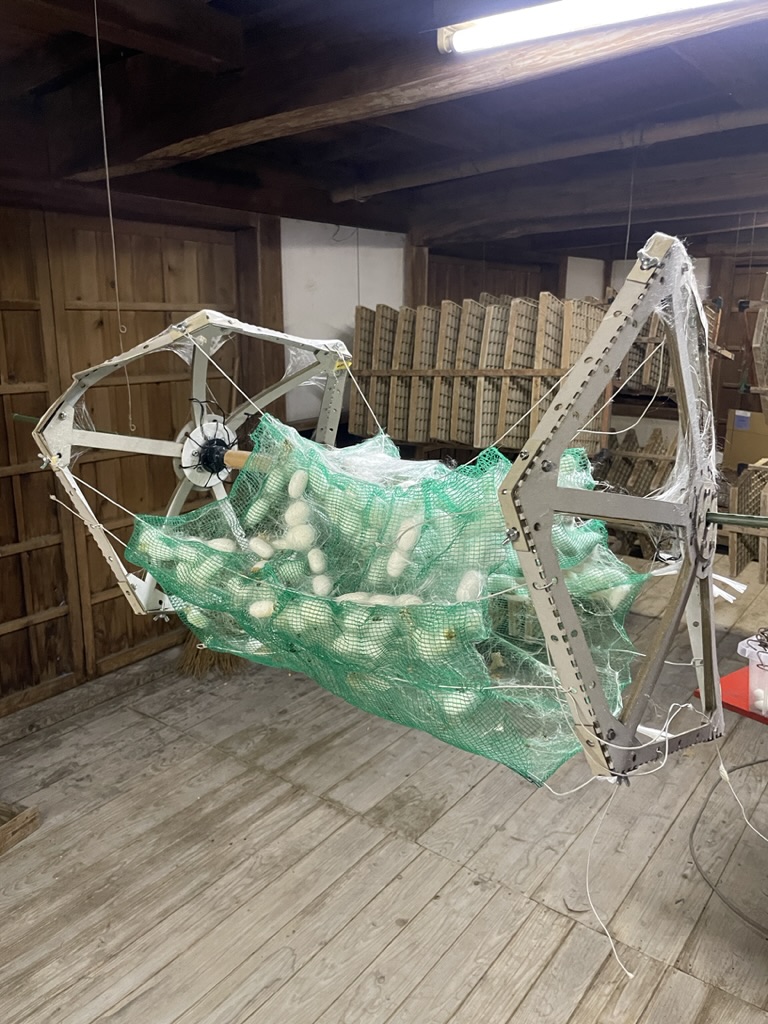
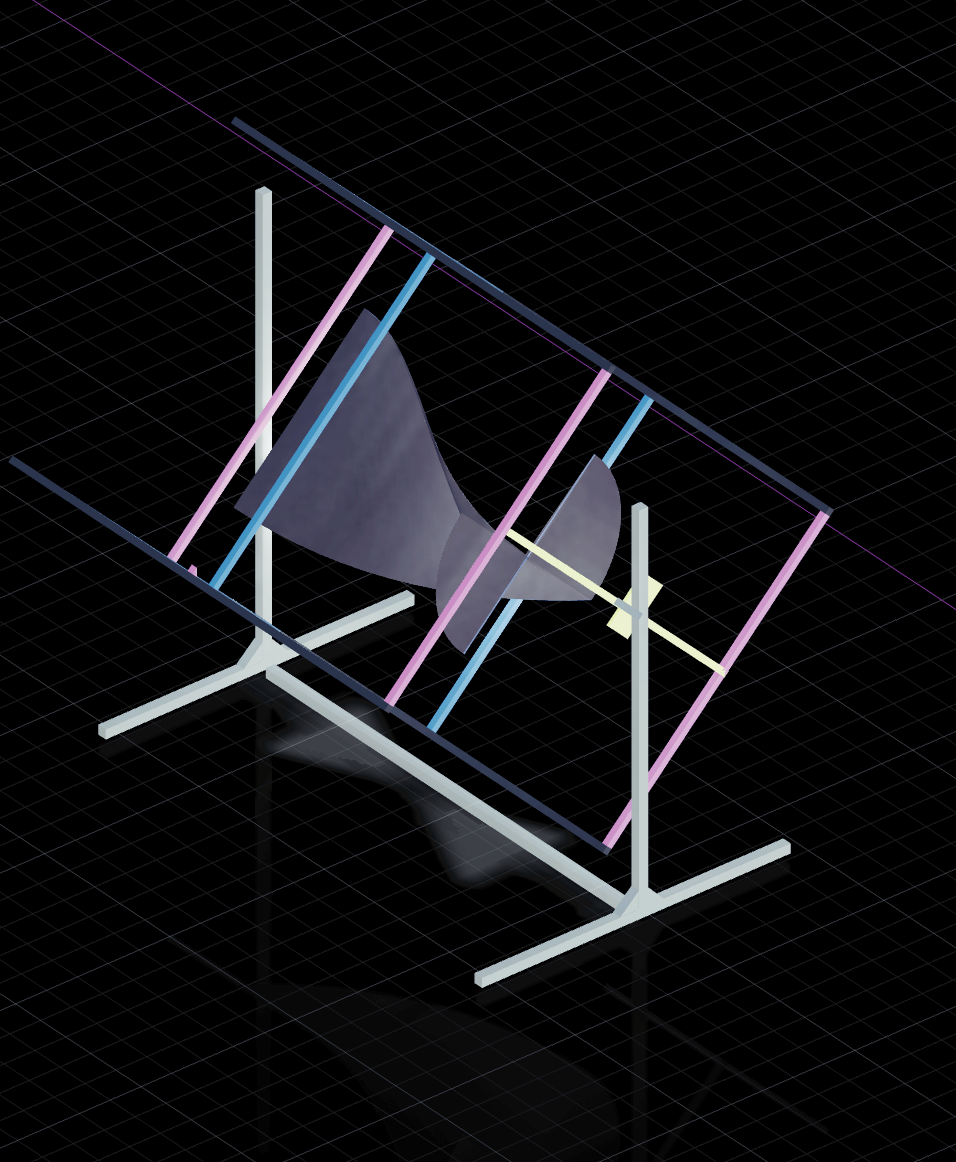
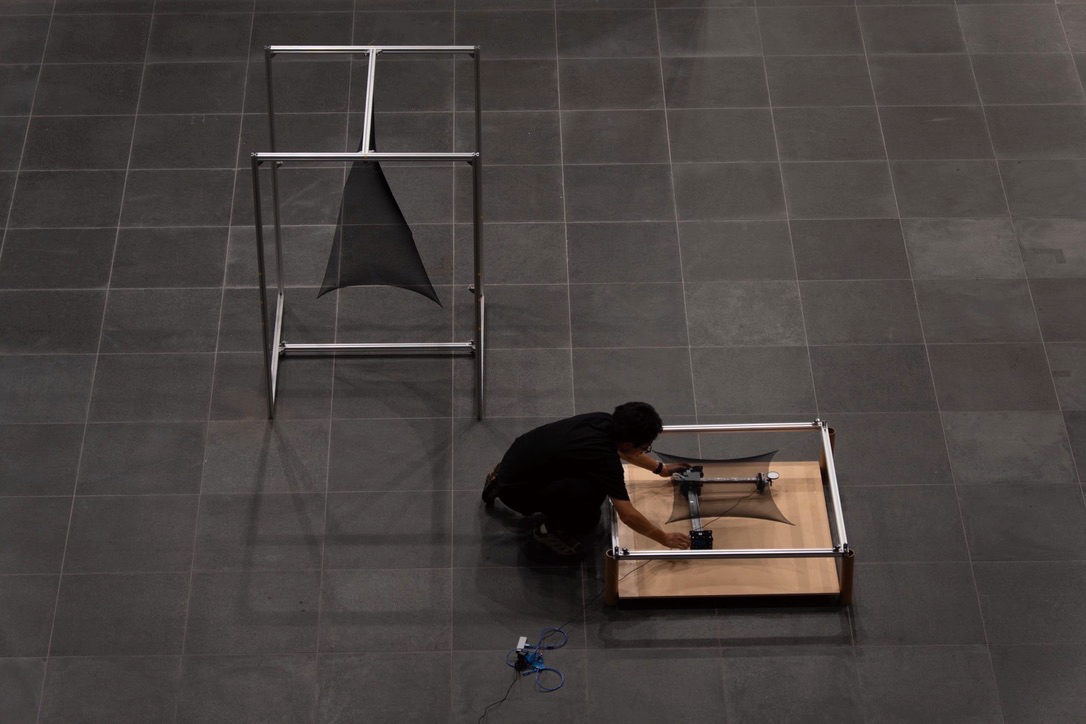
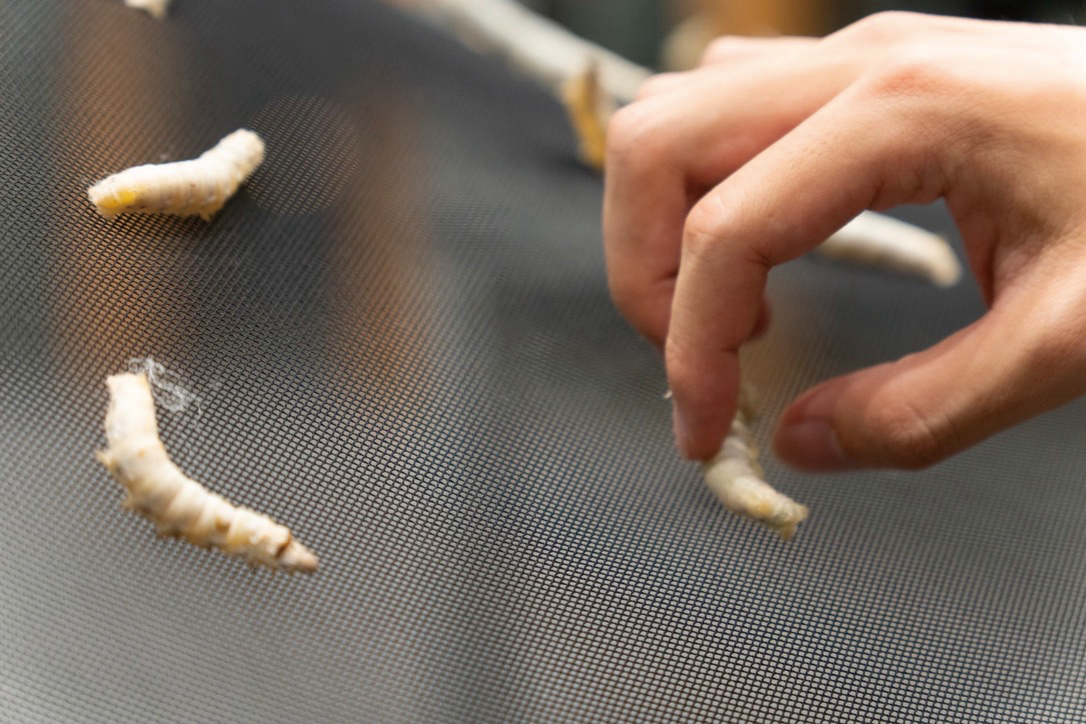
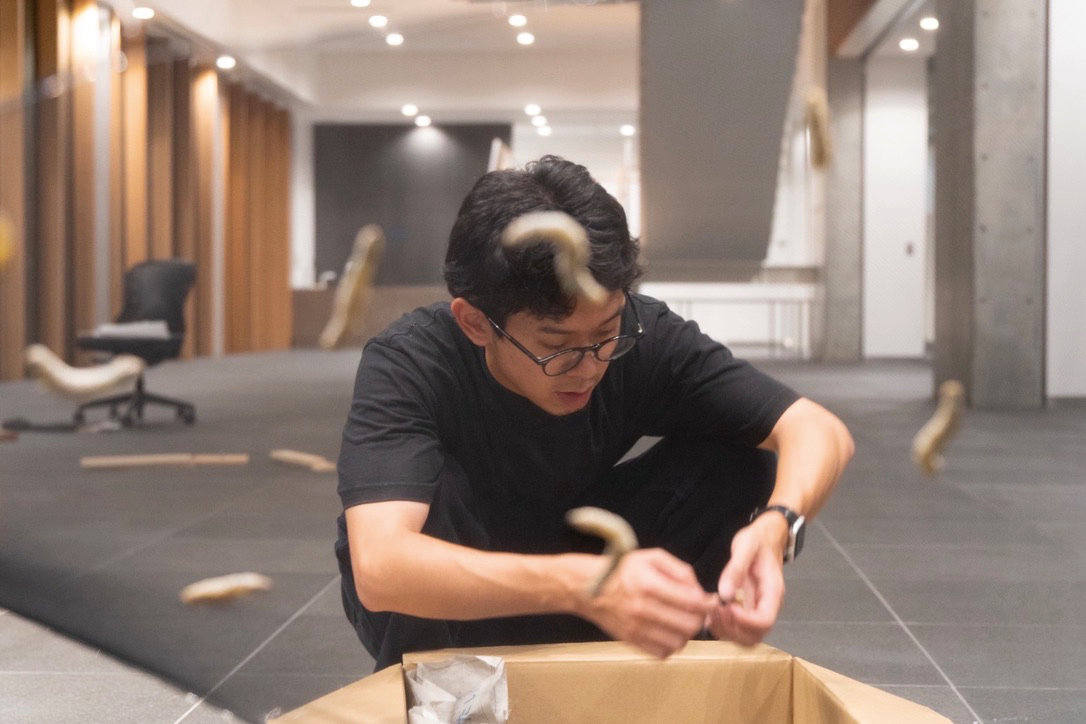
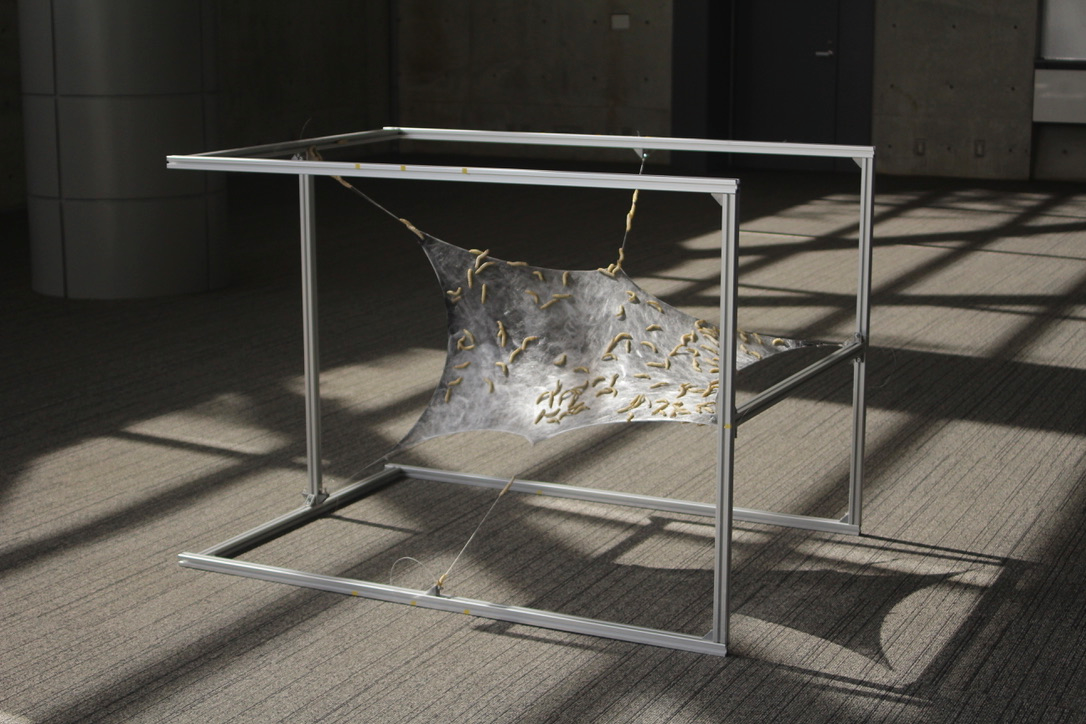
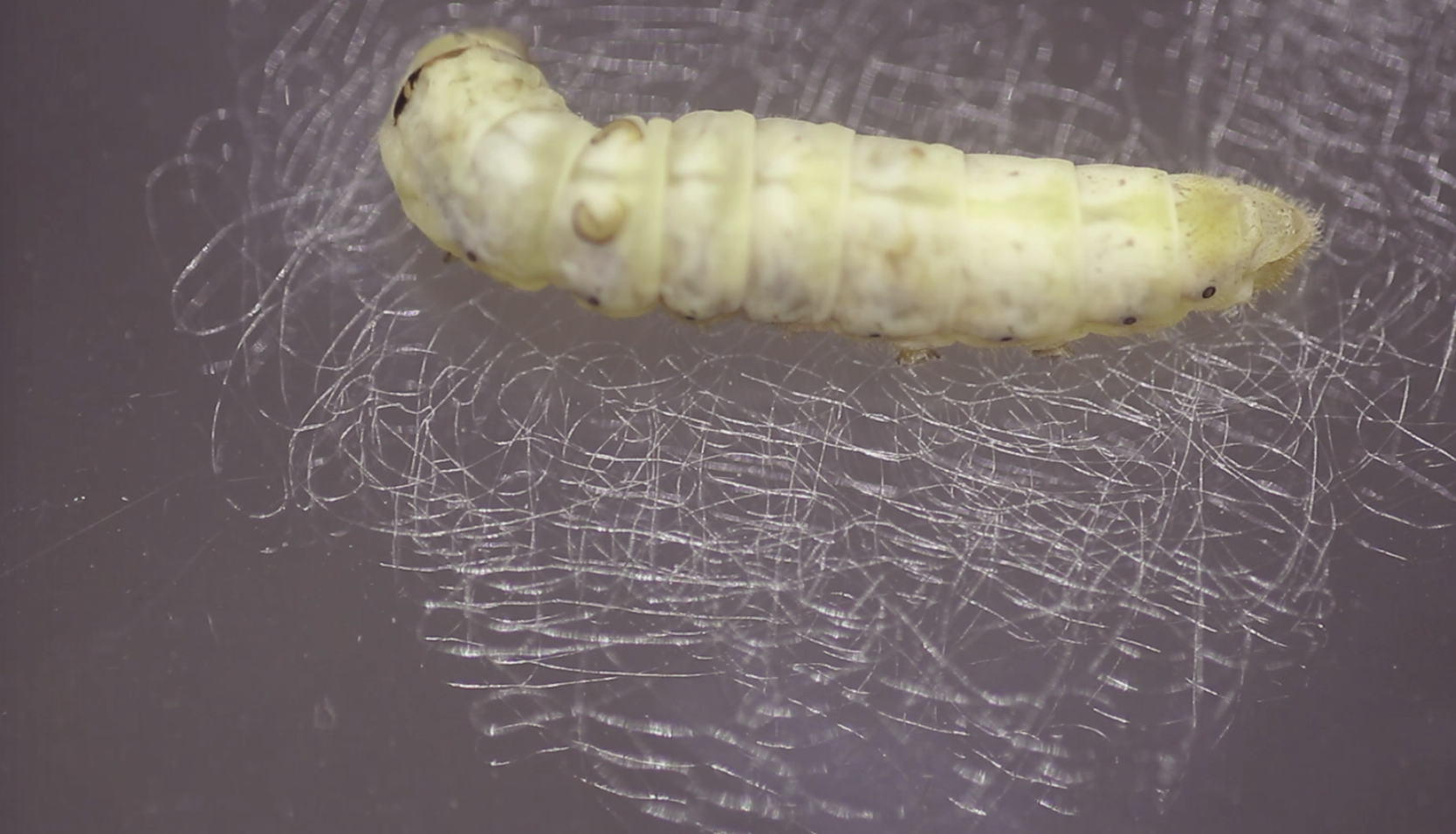
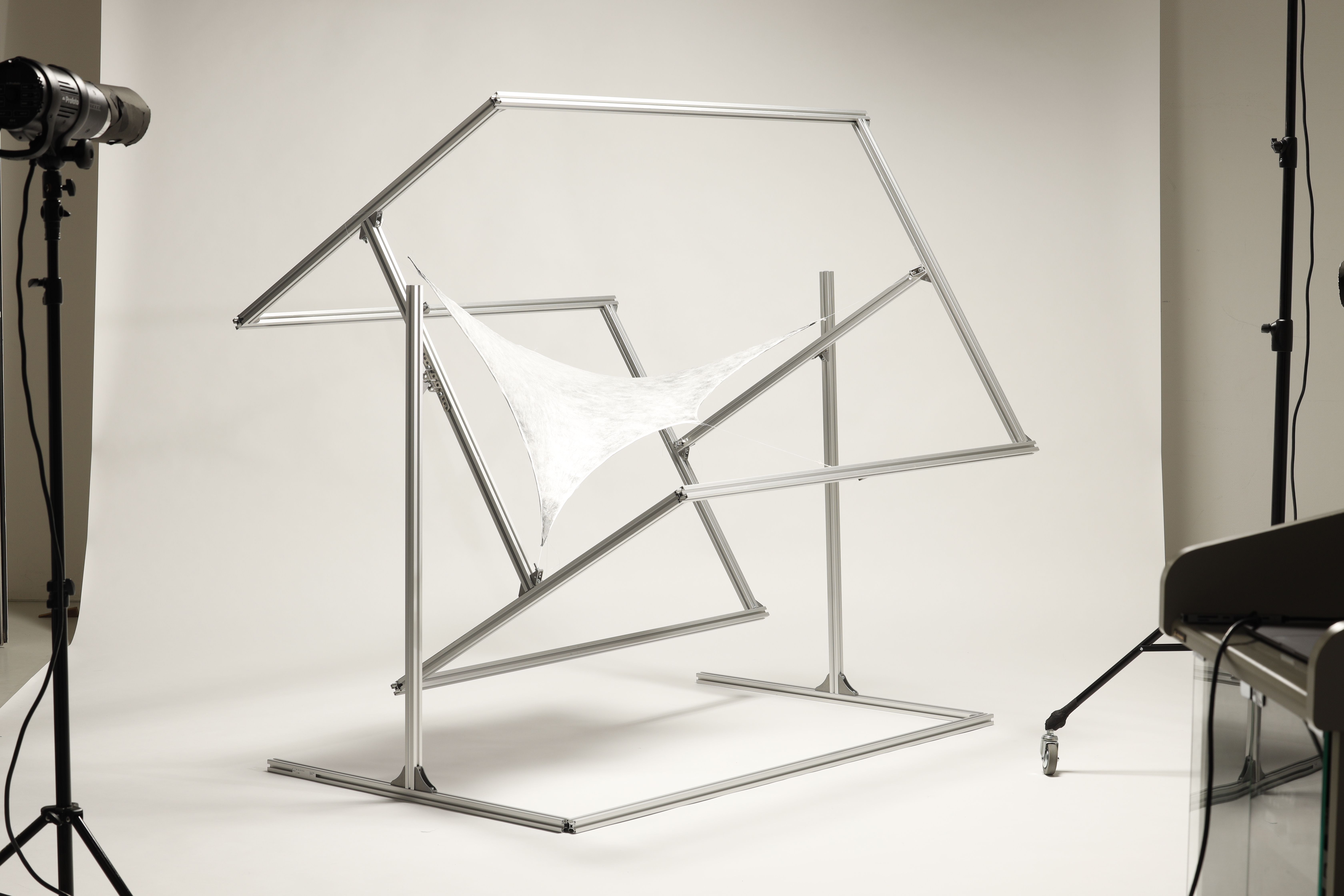
本プロジェクトは、秩父養蚕農家での2年のフィールドワークと実践ののち制作されました。SILK-BioCraftは人が蚕に快適な環境を用意し、蚕が糸を吐くことで完成する本製法では、右のような装置に蚕を配置し表面に糸を吐かせることで作り上げます。この装置は、蚕の動きを誘導し、糸を均一に吐かせる機能を持ちます。これは、養蚕農家で均質な繭を取るために用いられる道具である回転まぶしにヒントを得て設計されました。蚕の登上性(重力と逆方向に進む習性)を応用し、蚕が上に集まりバランスが変わることで、自然と装置が回転する仕組みになっています。本手法では、『平面吐糸』という蚕の習性を用います。これは、蚕を平面に配置することで、球体を形成する通常の糸の吐き方ではなく、平面に糸を吐くというものです。平面吐糸では、蚕は、頭部を『八の字』に動かしながら吐糸を行います。この運動が平面にそのまま定着することで、光を微細に反射する面として生まれます。これによって、蚕の自律的な運動に由来する「生命の気配」や、「時間の積層」といった蚕の生命活動(意味)が、時間とともに質感、光学的な現象として物質表面へ定着します。
A method and proposal for a new craft that enables the creation of works through co-creation between silkworms and humans by focusing on the silkworm's flat cocooning behavior and using a special device to induce it.
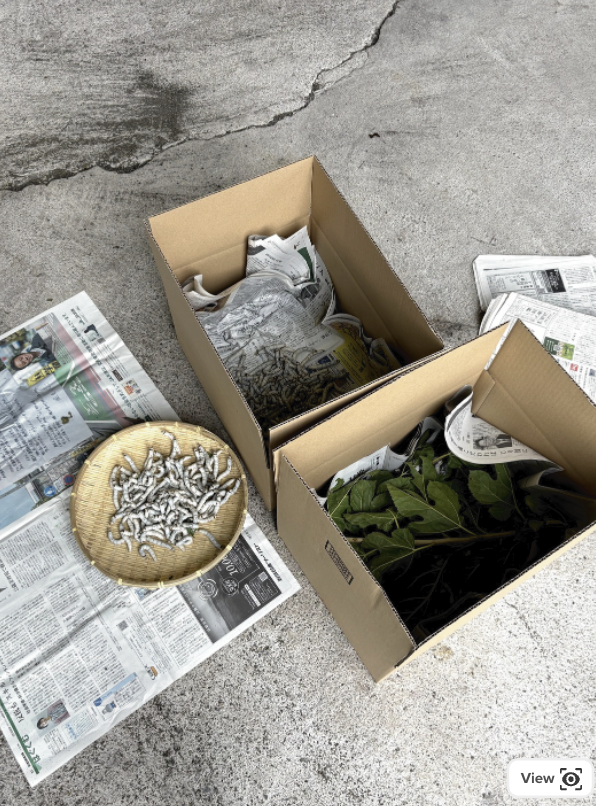
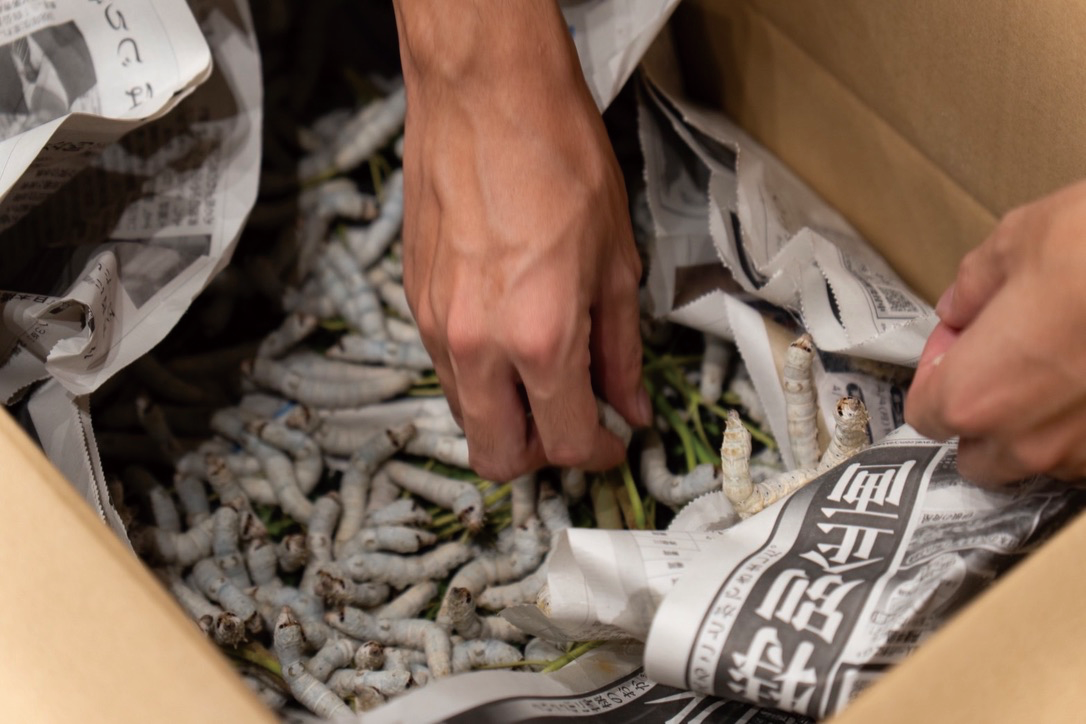
This project followed two years of fieldwork and practice at a sericulture farm in Chichibu. In this method, the maker provides a comfortable environment for the silkworms, and the work is completed as they spin. The device places silkworms so that they spin on a surface. It guides their movement and encourages even thread distribution, and was inspired by the rotating mabushi used on farms to obtain uniform cocoons. Using the silkworm’s tendency to move against gravity, the device rotates as the worms gather upward. In “flat cocooning,” silkworms spin on a plane instead of a sphere; they move their heads in a figure-eight pattern, and this motion is fixed on the surface, creating a finish that reflects light in fine detail. The silkworm’s autonomous movement thus leaves “traces of life” and “layers of time” on the material as texture and optical phenomenon.